Power, Pull, and the Promise of Progress: Visualizing Sustainable Agriculture
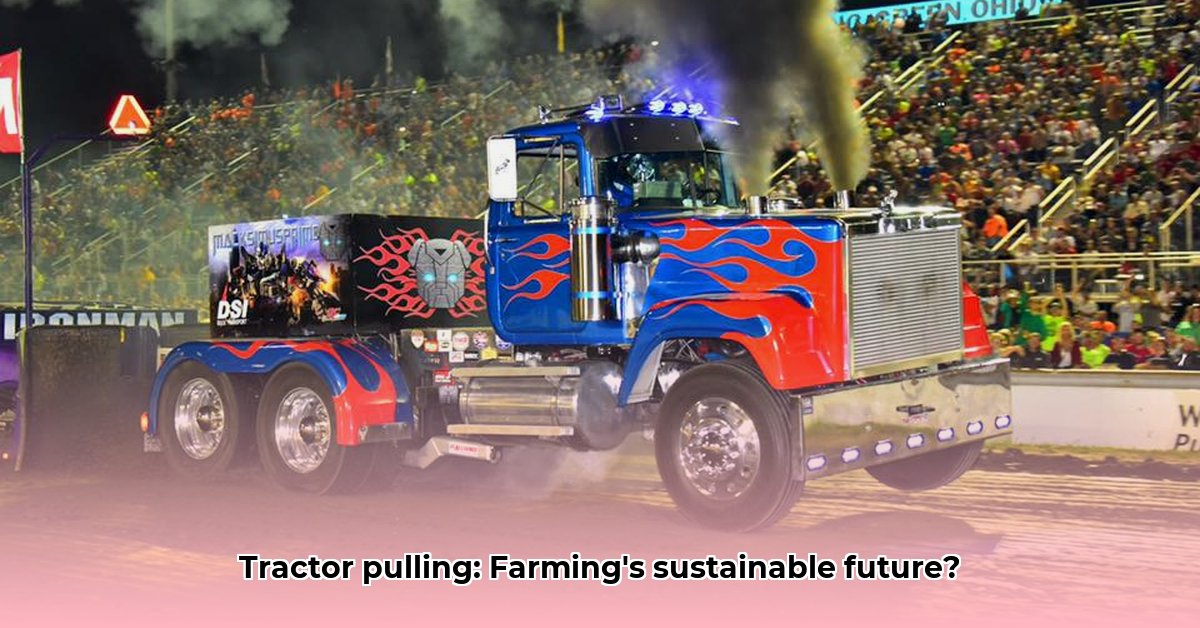
The seemingly disparate world of tractor pulling competitions offers a valuable lens through which to examine the sustainability of modern agricultural practices. While the spectacle emphasizes raw power, a closer analysis of accompanying imagery reveals crucial insights into tractor size, fuel consumption, and overall efficiency. These visual data points, while incomplete, provide a starting point for a broader discussion on optimizing agricultural machinery for environmental responsibility and economic viability. The question remains: can we leverage the visual information gleaned from tractor pulling events to inform the development of truly sustainable agricultural practices? For more visual examples, see these tractor pull pictures.
The Puzzle of Data: Quantifying Sustainability from Visual Clues
While tractor pulling pictures offer a compelling visual representation of machinery size and apparent power, they inherently lack the quantitative data needed for a thorough analysis of sustainability. Images depict large tractors, often emitting significant exhaust plumes – a visual indicator of high fuel consumption and potentially substantial greenhouse gas emissions. However, the absence of precise metrics, such as fuel efficiency (liters/hectare) or greenhouse gas emissions (kg CO2e/ton of harvested crop), limits the ability to draw definitive conclusions. This data gap hinders a robust comparison between competition tractors, often optimized for maximum pulling force, and the machines used in everyday farming operations. Dr. Anya Sharma, Agricultural Engineer at the University of California, Berkeley, emphasizes this point: "Visual observations alone are insufficient. We need precise measurements of fuel consumption, emissions, and overall operational efficiency to accurately assess the environmental impact of different tractors."
This lack of comprehensive data presents a significant challenge. Without standardized metrics and readily available datasets, establishing a clear correlation between tractor size, fuel consumption, and environmental impact remains difficult. Therefore, any conclusions drawn from visual analysis alone must be considered provisional and require further investigation.
Toward a Greener Future: A Data-Driven Approach to Sustainable Agriculture
To move beyond anecdotal observations, a multi-pronged approach is necessary:
Comprehensive Data Collection: A systematic effort to gather standardized data on fuel consumption, greenhouse gas emissions, and operational efficiency across various tractor models is crucial. This data should encompass both competition and commercially available tractors to facilitate meaningful comparisons.
Standardized Metrics and Benchmarks: The establishment of standardized metrics and benchmarks for comparing tractor performance and environmental impact is essential for consistent and reliable analysis. This will allow for meaningful comparisons across various tractor models and farming operations.
Life Cycle Assessment (LCA): Conducting a comprehensive LCA for different tractors will provide a complete picture of their environmental impact, encompassing manufacturing, operation, and end-of-life disposal. This holistic approach is vital for accurate assessment.
Technological Innovation and Policy Support: Investment in research and development of alternative fuels (biofuels, hydrogen) and advanced technologies (electric tractors, autonomous systems) is essential. Furthermore, supportive policies, such as tax incentives for fuel-efficient equipment, can accelerate the adoption of sustainable technologies.
Working Together: Stakeholder Responsibilities in Achieving Sustainability
The transition towards sustainable agriculture requires a collaborative effort among various stakeholders:
| Stakeholder | Short-Term Actions | Long-Term Actions |
|---|---|---|
| Manufacturers | Improve fuel efficiency through design optimization; explore alternative fuel options. | Develop and market highly efficient, low-emission tractors utilizing sustainable materials. |
| Farmers | Implement best practices for fuel-efficient operation; consider tractor sizing for specific tasks. | Adopt precision agriculture techniques; invest in fuel-efficient equipment. |
| Researchers | Develop standardized metrics and protocols for data collection and analysis. | Conduct comprehensive LCAs and disseminate findings to inform policy and practice. |
| Policymakers | Offer incentives for the adoption of sustainable agricultural technologies. | Invest in research and development; implement regulations promoting environmental stewardship. |
Beyond the Competition: A Vision for Sustainable Farming Practices
While tractor pulling events serve as a captivating display of agricultural power, the images they produce offer a compelling opportunity to initiate a conversation about sustainability. By shifting the focus from sheer power to efficiency and minimizing the environmental footprint, we can leverage these visual cues to guide the development of a more responsible and sustainable agricultural future. This requires a collective commitment to data-driven decision-making, technological innovation, and policy support, ultimately leading to a more environmentally conscious and economically viable agricultural sector. The journey towards a sustainable future in agriculture is ongoing, and continued research and collaboration are essential to refine our understanding and optimize practices.